
From customer issue to root cause
A customer complaint on its own tells you almost nothing. It becomes actionable when you know whether it matches a real error, how many other people hit the same thing, and which change caused it. PocketClaw does that cross-checking. It takes a report from your inbox or support tool, searches your error tracker for the matching exception, counts the affected users, and looks through recent commits and deploys for the change that lines up with when it started. Then it files the fix task with that evidence attached and drafts the reply to the customer. You approve both. The investigation is the part that used to cost you an hour.
How it works, step by step
A customer reports something broken
A message arrives saying checkout is failing. On its own it could be one person on a bad connection, or it could be everyone.
It finds the matching error
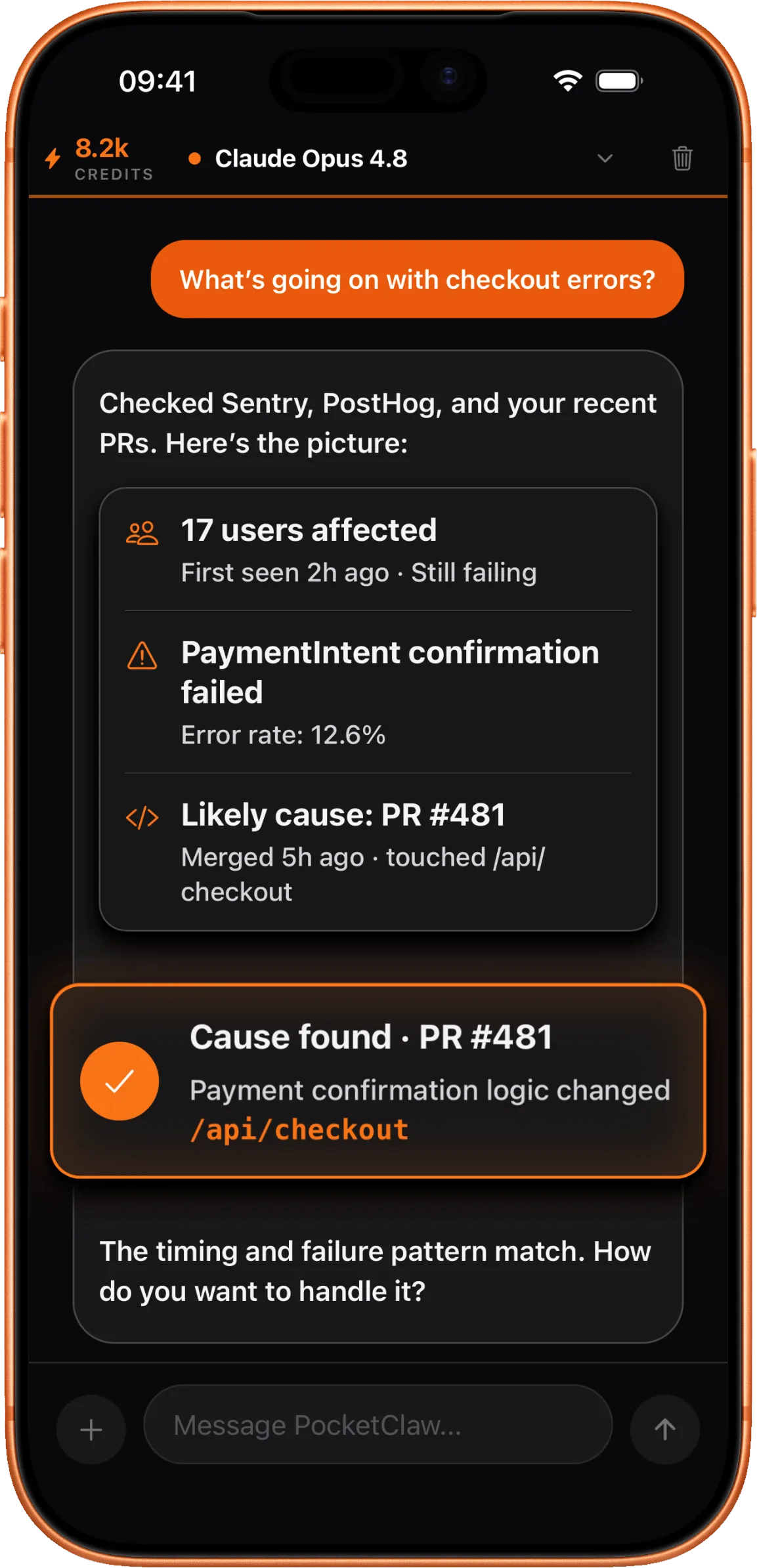
PocketClaw searches your error tracker for exceptions that match the description and the timing. It finds the failure on /api/checkout rather than relying on the customer's account of what happened.
It counts who else is affected
One report becomes 17 affected users and a 12.6% error rate. That number is what decides whether this interrupts your day or goes on the list.
It names the change that caused it
PocketClaw looks at what shipped before the errors started and identifies PR #481, merged five hours earlier, as the likely cause.
It files the task and drafts the reply
The fix task lands in your tracker with the error, the user count, and the suspected change attached. The customer reply is drafted and waiting. Both need your approval.
What it looks like
Get PocketClaw
Have PocketClaw run this from your phone. It reads across your connected tools and prepares the work, and nothing sends until you approve it.

Common questions
- Does it fix the bug?
- No. PocketClaw does the investigation and prepares the work. It finds the error, counts the impact, names the likely cause, files the task, and drafts the reply. Writing and shipping the fix is yours.
- What if it names the wrong cause?
- It shows you the evidence it used, so you can see why it reached that conclusion and correct it. It presents a likely cause rather than a certainty.
- Which tools does this need?
- It works best with an error tracker such as Sentry, a code host such as GitHub or GitLab, and an issue tracker such as Linear or Jira. It still helps with fewer connected, using whatever it can reach.